
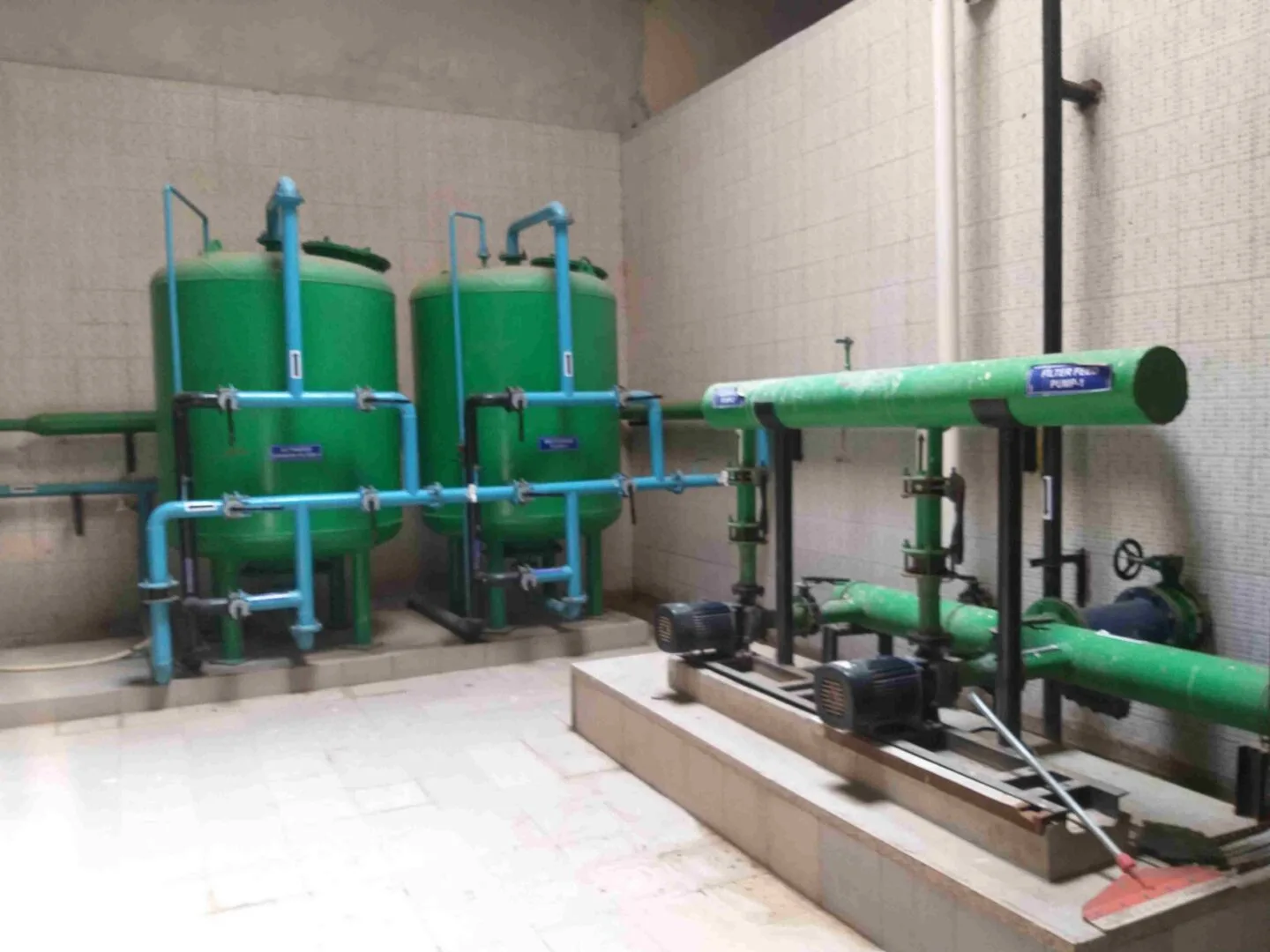
Reverse osmosis is a pressure-driven membrane process used to reduce dissolved salts and many other contaminants from water. A complete RO plant normally combines pretreatment, pressure control, membrane separation and post-treatment according to the quality of the feed water and the required treated-water standard.
What is Reverse Osmosis (RO)?
RO pushes water through a semi-permeable membrane. Water molecules pass through more readily than many dissolved salts and larger contaminants, creating a treated permeate stream and a concentrated reject stream.
How Does Reverse Osmosis Work?
The membrane is the central separation element, but successful RO operation depends on a complete treatment train.
- Sediment filtration to reduce dirt, rust and suspended particles.
- Carbon or other pretreatment where chlorine, organic compounds, taste or odour need to be controlled.
- High-pressure pumping to create the pressure needed for membrane separation.
- RO membrane treatment to reduce dissolved solids and selected contaminants.
- Permeate collection, post-treatment and reject management.
The Science Behind RO
Natural osmosis moves water across a membrane toward the side with higher dissolved-solids concentration. Reverse osmosis applies pressure to reverse that direction and produce a lower-salt water stream.
RO Membranes and Their Role
Semi-permeable membranes are designed to allow water to pass while rejecting a high proportion of dissolved contaminants. Membrane selection depends on feed-water chemistry and the treatment objective.
Components of an RO System
- Pretreatment filters
- RO membranes and pressure vessels
- High-pressure pumps
- Instrumentation and control
- Storage and post-treatment
- Reject handling
Applications of Reverse Osmosis
Industrial Applications
RO is used in food and beverage production, pharmaceuticals, power generation, electronics, chemical processing and other industries that need controlled water quality.
Residential Water Purification
Compact systems can reduce dissolved contaminants and improve water quality for household use when the feed water and system are suitable.
Desalination
RO is widely used to reduce salts in brackish or seawater, with system design adjusted for salinity, recovery and energy requirements.
Wastewater Reuse
After suitable pretreatment, RO can be part of an advanced polishing system for wastewater reuse.
Benefits of Reverse Osmosis
- High reduction of many dissolved contaminants.
- Can improve taste and reduce salinity.
- Modular and scalable system configurations.
- Useful across residential, commercial and industrial applications.
Challenges and Limitations
- Energy consumption and pressure requirements.
- Reject-water generation.
- Scaling, fouling and maintenance.
- Pretreatment requirements.
- Not every contaminant is best addressed by RO alone.
- Treated water chemistry may require remineralization or post-treatment.
RO Membrane Technologies
Common membrane families include thin-film composite, cellulose-acetate and polyamide-based materials. Selection depends on water chemistry, chlorine tolerance, fouling risk and performance targets.
Recent Innovations in RO Technology
- Nanomaterial and advanced membrane research.
- Membrane-distillation hybrids and alternative pretreatment.
- Higher-permeability and anti-fouling membranes.
- Closed-circuit and other new system configurations.
- AI and data-driven monitoring for optimization.
The Future of Reverse Osmosis
Continued improvements in membranes, energy recovery, automation and monitoring are making RO more efficient and adaptable. The technology will remain important where high-quality water and dissolved-solids reduction are required.
Turn insight into a practical environmental solution.
Explore Vulture Innovation’s solid-waste, sewage, water and industrial-effluent treatment capabilities.