

Vulture Innovation Journal
Water treatment converts raw source water into water that meets the quality required for its intended use through a series of controlled treatment stages.
The exact WTP plant process depends on whether the source is surface water, groundwater or another raw-water stream, but most systems combine removal of suspended matter, filtration and disinfection with treatment for source-specific contaminants.
What is Water Treatment?
Water treatment is the process of improving raw-water quality by removing physical, chemical and biological contaminants. A treatment plant is designed around source-water analysis and the final use of the treated water. Municipal drinking-water treatment, industrial process water and utility water can require different process trains and monitoring standards.
Water Treatment Process Step by Step
1. Raw Water Intake and Screening
Water is collected from the selected source and pumped to the treatment plant. Screens remove leaves, plastics and larger debris before the water reaches sensitive equipment. Intake design should account for seasonal changes in flow and raw-water quality.
2. Grit and Suspended-Matter Control
Sand, silt and heavier particles can damage pumps or increase the load on later filters. Depending on the source, grit removal or pre-sedimentation may be used before chemical treatment.
3. Coagulation and Flocculation
Very fine particles can remain suspended because they do not settle easily on their own. Coagulants are dosed to destabilize these particles, and controlled mixing encourages them to form larger flocs that can be separated more effectively.
4. Sedimentation or Clarification
Water passes through a clarifier where formed flocs settle. Sludge collected from the bottom is removed for handling, while clarified water continues to filtration. Some compact systems use alternative clarification technologies where space or process conditions require them.
5. Filtration
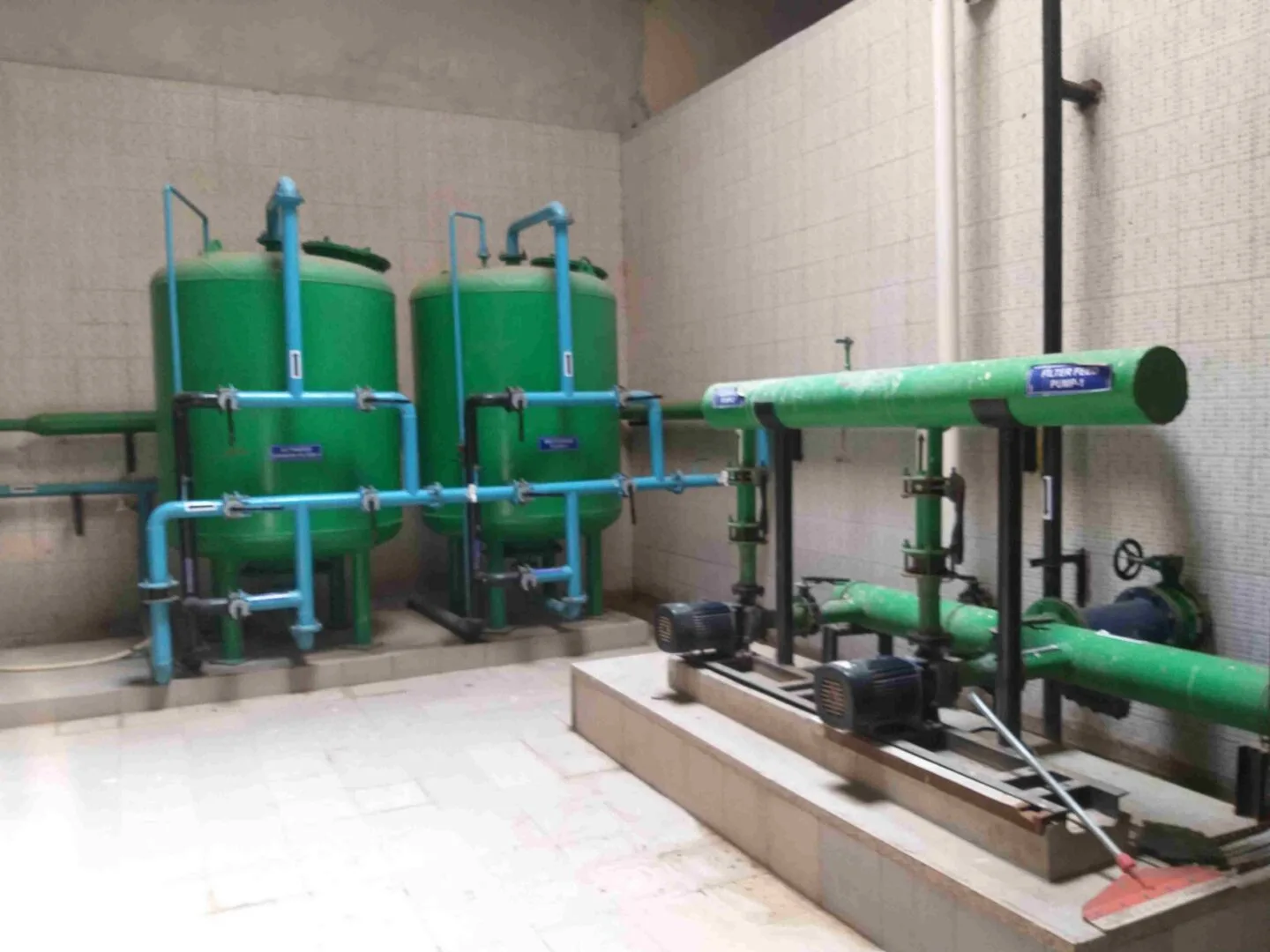
Filters remove finer suspended particles that remain after clarification. Depending on the application, a WTP may use multimedia or pressure sand filters, activated carbon, cartridge filtration, ultrafiltration or other technologies. Activated carbon is useful where taste, odour or selected organic compounds need further control.
6. Disinfection
Disinfection reduces pathogenic microorganisms before treated water is stored or distributed. Chlorine, ultraviolet light or other suitable methods can be used. The selected method, dose and contact time should be based on water quality and the intended use.
7. Advanced Treatment Where Required
Some raw waters contain dissolved salts, hardness, iron, fluoride or other contaminants that require additional processes. Softening, ion exchange, activated carbon, ultrafiltration and reverse osmosis are examples of technologies that may be added when basic clarification and filtration are not sufficient.
8. Treated-Water Storage and Distribution
After treatment, water is stored in a clean tank and supplied to the intended distribution system. Maintaining tank hygiene, residual disinfectant where applicable, pressure control and routine monitoring is important because water quality must be protected after it leaves the treatment process.
Key Components of a Water Treatment Plant
- Intake system: collects and transfers raw water.
- Screens and pre-treatment: remove larger debris, grit and source-specific contamination.
- Chemical dosing and flocculation: support removal of fine suspended matter where required.
- Clarifier: separates flocculated solids from water.
- Filters: polish suspended matter and, depending on media, selected dissolved or organic contaminants.
- Disinfection system: controls microorganisms.
- Storage and pumping: maintain treated-water availability and distribution.
- Instrumentation: supports monitoring of flow, pressure and water-quality parameters.
How Is the Correct WTP Process Selected?
There is no universal treatment train for every water source. Design should begin with raw-water testing and an understanding of daily and peak demand. Turbidity, hardness, TDS, iron, fluoride, microbial quality, organic matter and seasonal variation can all affect process selection. Treating only the visible turbidity while ignoring dissolved contaminants can leave important water-quality issues unresolved.
Why Regular Operation and Monitoring Matter
Even a well-designed plant needs correct chemical dosing, filter backwashing, disinfection control, preventive maintenance and routine water testing. Operators should track pressure loss, filter performance, storage-tank hygiene and changes in source-water quality. These records help identify problems before they affect the final supply.
Final Thoughts on the Water Treatment Plant Process
The water treatment process is a coordinated chain from raw-water intake to final storage and distribution. Screening protects equipment, coagulation and clarification remove fine suspended matter, filtration improves clarity, and disinfection controls microorganisms. Additional technologies are added only when the source water and required outlet quality justify them. A properly designed and operated WTP therefore combines engineering, monitoring and maintenance rather than relying on a single filter.
FAQs on the Water Treatment Plant Process
What is the purpose of water treatment?
Water treatment removes or reduces contaminants so raw water reaches the quality required for its intended domestic, commercial or industrial use.
What are the main steps in a conventional WTP?
Typical stages include intake and screening, coagulation and flocculation, clarification, filtration, disinfection and treated-water storage. Additional treatment may be required for specific contaminants.
Does every WTP need reverse osmosis?
No. RO is useful when dissolved salts or other contaminants require membrane separation, but it is not necessary for every source. Water analysis should determine whether RO is appropriate.
Why is treated water monitored after filtration?
Filtration alone does not confirm that every required parameter has been met. Monitoring verifies treatment performance and helps protect water quality during storage and distribution.